If you told me two days ago that I’d be writing a deep-dive analysis on a preschool show, I would have laughed. But here we are. Yesterday, Netflix dropped Season 2 of Dr. Seuss’s Red Fish, Blue Fish, and while millions of parents likely used it to keep their toddlers busy, I found myself strangely captivated by the finale.
For the uninitiated, this isn’t the dialogue-heavy Cat in the Hat. This series is a “silent comedy” masterpiece—think Buster Keaton meets a fishbowl. But the Season 2 ending, specifically the final segment “Excited/Calm,” delivered a resolution that felt incredibly relevant for anyone navigating the chaos of 2026.
Let’s dive into what actually happened in the ending and why it’s garnering unexpected praise from critics and parents alike.
The Season 2 Journey: Mastering the Opposites
Before we get to the ending, we have to respect the format. Season 2 released yesterday (Jan 1) with 10 new episodes, continuing the show’s clever gimmick: the characters only speak in “opposites.”
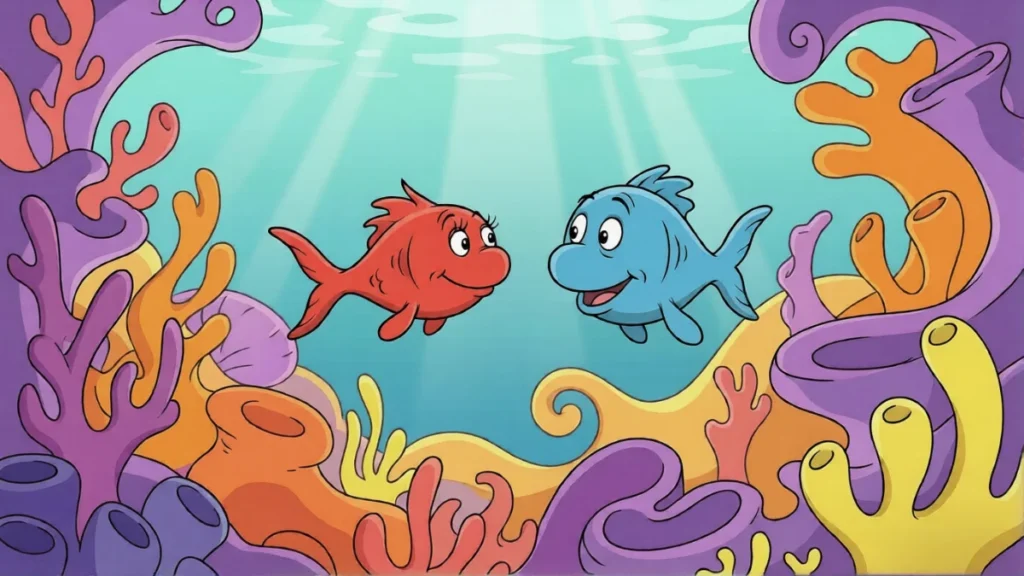
Throughout the season, we saw Red (voiced by the legendary Brian Drummond) and Blue (Andrea Libman) tackle concepts like “Pick Up/Drop” and “Build/Destroy.” It’s slapstick gold. Red is usually the anxious one trying to maintain order, while Blue is the agent of chaos.
If you’re looking for high-octane sci-fi drama, this isn’t it (for that, check out our 10 Best Netflix Sci-Fi Movies of 2025 list). But if you appreciate visual storytelling, the animation by Atomic Cartoons is genuinely gorgeous.
The Ending Explained: “Excited vs. Calm”
The final episode of Season 2 is a triple-header: “Grow/Shrink,” “Fast/Slow,” and finally, “Excited/Calm.”
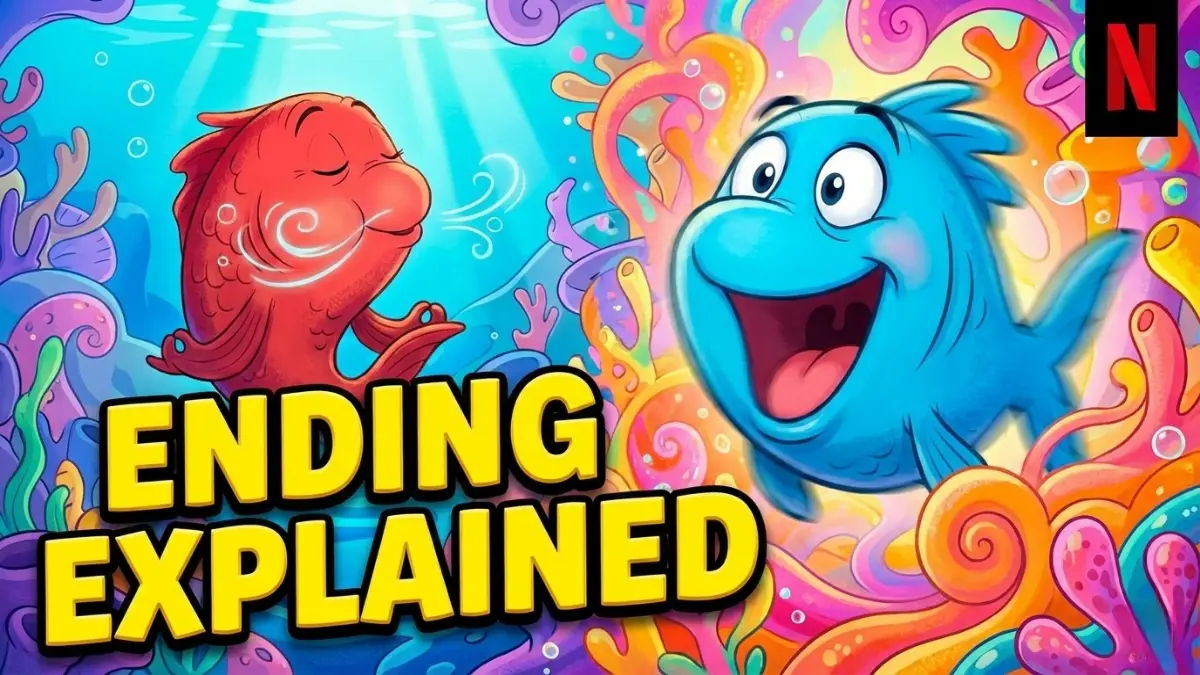
In the climax, Blue Fish discovers a stash of “Fizz-Berries” (a deep cut for Seuss fans). Blue eats them and enters a state of hyper-speed vibration—representing “Excited.” The animation here is wild, shifting into a frantic, scribbly style that perfectly captures the feeling of sensory overload. Red Fish, in contrast, tries to meditate, representing “Calm.”
The Resolution
Usually, these episodes end with a gag. But this time, the resolution was surprisingly tender. Blue’s excitement becomes too much—they start bouncing off the coral, creating a whirlpool that threatens to destroy their home.
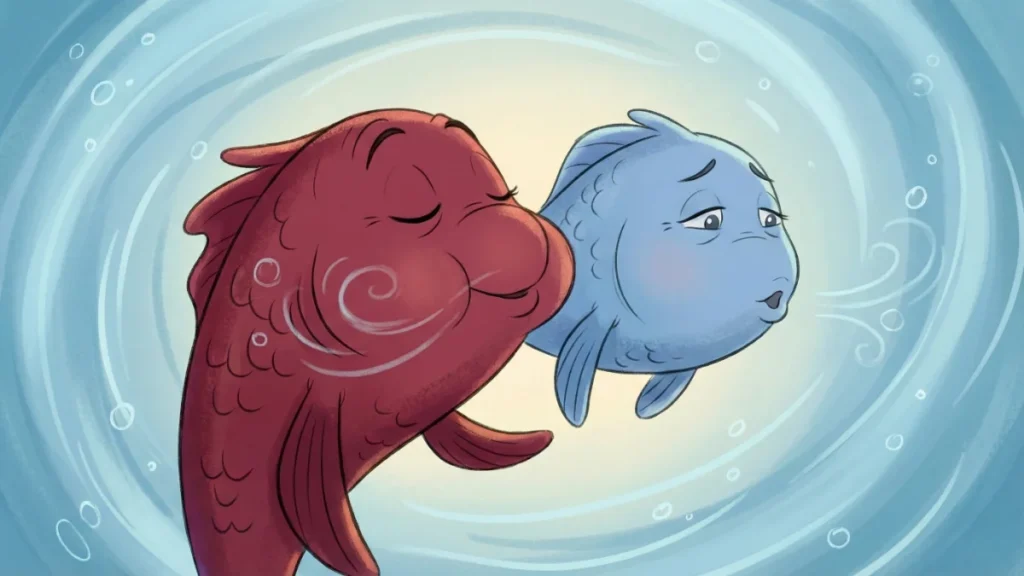
Red doesn’t stop Blue by force. Instead, Red simply swims to the center of the storm and holds a “Still” pose. Slowly, the blue water mixes with Red’s calmness. Blue mimics Red’s breathing (gills flaring slowly), and the frantic scribbles fade back into the show’s smooth, clean lines.
It’s a visual metaphor for Co-regulation. For parents watching, it was a masterclass in handling a tantrum. For the rest of us, it was a reminder that in a world of constant noise, “Calm” is an active choice, not just a lack of movement.
It’s not quite the dimension-shattering twist of the Donnie Darko Ending, but for a show about two fish, it was surprisingly Zen.
What This Means for Season 3
The episode ends with both fish falling asleep in a “Balanced” state, neither too fast nor too slow.
While Netflix hasn’t officially confirmed Season 3, the introduction of the “Green” seaweed in the background (a nod to Green Eggs and Ham?) hints that the Seuss Universe (Seuss-iverse?) is expanding.
If you’ve just finished this with your kids and need something for yourself to watch tonight, maybe pivot to something with a bit more romance from our Top 10 Best Romantic Netflix Movies of 2025 list.
Frequently Asked Questions
Is Red Fish, Blue Fish connected to the ‘Green Eggs and Ham’ series?
Yes! They are part of Netflix’s “Seuss-iverse.” While the animation styles are different, easter eggs suggest they share the same ocean.
Who voices the Narrator in Season 2?
The soothing voice guiding us through the opposites is Naomi Tan, who returns from Season 1.
Why is this show rated TV-Y?
It is designed specifically for preschoolers (ages 2-5) to learn vocabulary, but the visual comedy appeals to all ages.
How many episodes are in Season 2?
There are 5 full episodes, but each is split into 3 segments (like “Excited/Calm”), making for 15 new stories total.
Final Thoughts
Dr. Seuss’s Red Fish, Blue Fish Season 2 proves that you don’t need complex dialogue to tell a good story. Sometimes, you just need a Red Fish, a Blue Fish, and a reminder to just… breathe.
Did you catch the Season 2 finale? Did your kids learn the difference between “Fast” and “Slow”? Let us know in the comments!