By Anjali R Published: January 4, 2026
Land of Sin isn’t just a movie; it’s a 2-hour anxiety attack, and we need to talk about that ending immediately.
If you are reading this, you’ve probably just walked out of the theater (or turned off your TV) with your jaw on the floor, trying to process exactly what happened in the final ten minutes. Don’t worry, you aren’t alone. The Land of Sin ending explained threads are already lighting up social media, and for good reason. Director Elena Russo dropped a bomb on us that recontextualizes the entire film.
Released on January 2, 2026, this neo-noir nightmare has already cemented itself as a contender for one of the best psychological thrillers 2026 has to offer. But amidst the stylish rain-soaked cinematography and the brooding silence of Detective Miller (played by a never-better Oscar Isaac), there’s a complex web of betrayal that needs untangling.
Let’s break down the climax, the identity of the “Sin Eater,” the meaning of the silver coin, and why that final shot is going to haunt my nightmares for weeks.
Warning: Massive Spoilers Ahead for Land of Sin (2026).
Table of Contents
The Setup: A City Drowning in Secrets
Before we get to the blood-soaked finale, let’s quickly recap the stakes. The Land of Sin 2026 movie plot centers on Detective John Miller, a man hanging onto his sobriety by a thread, and his rookie partner, Sarah Jenkins (played by rising star Anya Taylor-Joy).
They are hunting a serial killer known only as the “Sin Eater.” The killer’s M.O.? brutally murdering high-profile figures who have escaped justice for heinous crimes. At every scene, the killer leaves a single, antique silver coin placed over the victim’s left eye.
For two hours, we watch Miller and Jenkins chase shadows. The tension is palpable, the production value is sky-high—frankly, the visual fidelity rivals the massive expectations we have for other upcoming blockbusters, reminiscent of the hype detailed in our breakdown of Stranger Things Season 5: Everything We Know (Release Date, Cast & Wild Theories).
But as the clues align, they point Miller toward the abandoned St. Jude’s Orphanage, the very place where he grew up.
The Climax: Who is the Killer in Land of Sin?
The final act brings Miller to the ruins of St. Jude’s. He expects to find a ghost from his past, perhaps one of the priests who ran the abusive institution. Instead, he finds a meticulously arranged tableau in the chapel.
And then comes the reveal.
Who is the killer in Land of Sin? It isn’t a ghost. It isn’t the corrupt Mayor. It is his partner, Sarah Jenkins.
This is where the movie pulls the rug out. Throughout the film, Sarah has been the moral compass, the rookie by the book. But the Land of Sin final twist reveals that Sarah isn’t just a cop; she is the biological daughter of the first victim Miller ever failed to save back in his beat-cop days.
She didn’t join the force to serve the law; she joined to dismantle the system that failed her family. She used Miller’s investigations to find the targets, cleared the evidence herself, and then “ate the sins” of the city.
The Confrontation
The dialogue in the chapel is chilling. Sarah doesn’t monologue like a cartoon villain. She speaks with a terrifying calmness. She explains that the law is broken, a sieve that lets monsters through.
“You look for justice in a book, John,” she tells him. “I find it in the balance.”
Miller tries to talk her down, appealing to the bond they formed over the last year. This is where the writing shines. It’s emotional devastation. It reminded me of the raw emotion we felt reading about the Stranger Things Season 5 Ending Explained: The Bittersweet Fate of Eleven and Hawkins. It’s that same flavor of tragic necessity—where two people who love each other are forced onto opposite sides of fate.
The Meaning of the Silver Coin
The most searched question right now is about the significance of the calling card. Why a silver coin?
Sarah reveals the coin isn’t just a biblical reference to Judas Iscariot and the “30 pieces of silver” (the price of betrayal). In the lore of the film, it represents the toll for the ferryman.
In Greek mythology, Charon required a coin to ferry souls across the river Styx. By placing the coin on the victim’s eye, Sarah wasn’t just killing them; she was paying their toll to hell. She believed she was sending them exactly where they belonged.
However, the twist is that the coins are melted down police badges. Specifically, the badges of corrupt officers she had killed off-screen years prior. The symbolism is heavy: The corrupted law is what pays for the death of the sinner.
The Ambiguous Ending: Did Miller Survive?
The physical confrontation is brutal. It’s not a kung-fu fight; it’s a desperate scramble in the mud and rain. Miller, unwilling to shoot Sarah, takes a knife to the shoulder. Sarah, tears streaming down her face, raises her gun to finish him—not out of hate, but to protect her mission.
Then, a gunshot rings out.
The screen cuts to black for a full five seconds.
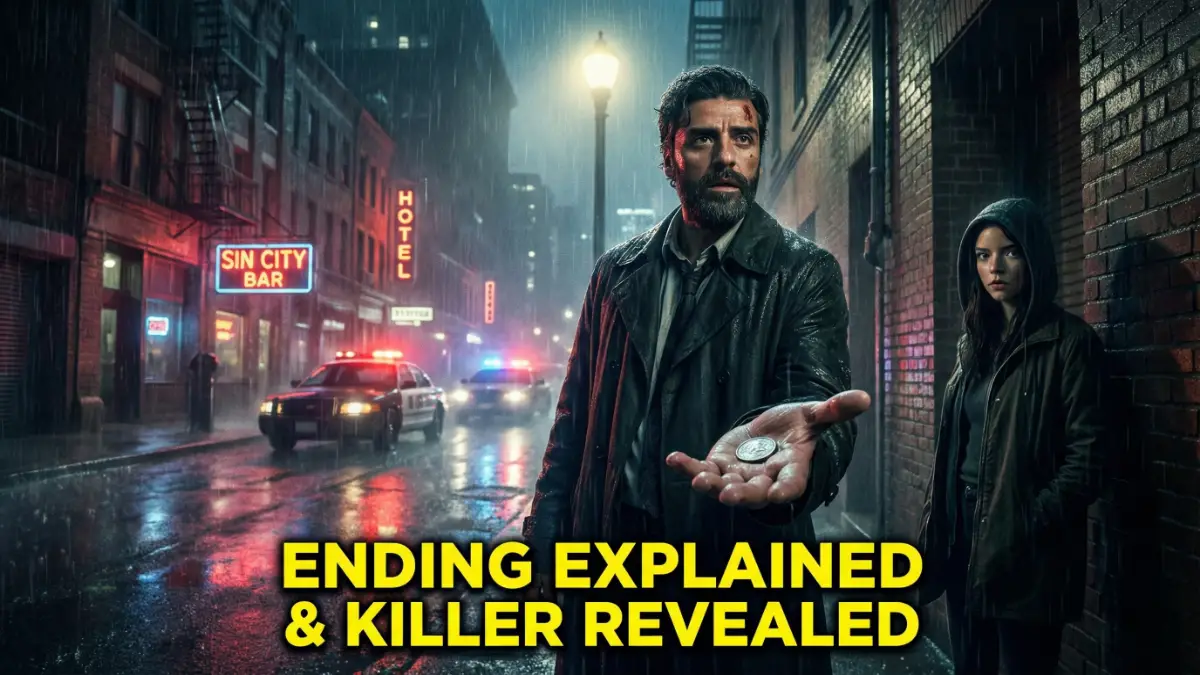
When the picture returns, we see Miller sitting on the steps of the precinct, wrapped in a shock blanket, the red and blue lights washing over him. He is alive. Sarah is wheeled out in a body bag.
But here is the kicker, and the true Land of Sin ending explained:
As the camera zooms in on Miller’s hand, he opens his fist. He is holding a silver coin.
What Does the Coin in Miller’s Hand Mean?
There are two ways to interpret this, and both are tragic:
- The Burden of Truth: Miller took the coin from Sarah’s body to hide evidence that would link the murders to her. He is protecting her legacy, effectively becoming an accomplice after the fact. He has chosen love over the law, completing his corruption.
- ** The Succession:** By taking the coin, Miller has accepted the mantle. He realizes Sarah was right—the system doesn’t work. The look in his eyes isn’t shock; it’s resolve. Detective Miller is the new Sin Eater.
Given the neo-noir tone, the second theory is much more likely. The “Land of Sin” didn’t destroy Miller; it converted him.
Editor’s Take: Why the Betrayal Felt Personal
I watch a lot of thrillers. I usually spot the “bad guy” in the first twenty minutes. But this? This one hurt.
Why? Because the movie spent so much time making us care about the mundane moments between Miller and Sarah. The scene where she forces him to eat a greasy diner burger because he hasn’t eaten in two days wasn’t just filler; it was building a foundation of trust.
When I realized Sarah was the mastermind, I felt like I had been betrayed. It’s rare for a film to make the audience complicit in the protagonist’s blindness. We didn’t see it coming because, like Miller, we didn’t want to see it coming.
That final shot of Miller holding the coin? It gave me chills. It suggests that trauma is a cycle. Sarah didn’t stop the wheel; she just handed it off to the next driver. It’s bleak, it’s cynical, and it is absolutely brilliant cinema.
Frequently Asked Questions
Is there a post-credits scene in Land of Sin?
No. The movie ends with the credits rolling over the sound of rain and distant sirens. Director Elena Russo stated she wanted the audience to sit with the silence.
Is Land of Sin based on a book?
No, it is an original screenplay written by Russo and screenwriter Mark Halloway. However, it draws heavy inspiration from classic noir films like Se7en and Chinatown.
Will there be a sequel to Land of Sin?
Currently, there are no official plans. However, given the Land of Sin final twist implying Miller might take up the mantle, a sequel is narrative-possible. But do we really want one? Sometimes a story is perfect as a standalone tragedy.
What is the song playing during the credits?
The haunting track is a slowed-down, acoustic cover of “Ain’t No Grave” by Johnny Cash, performed specifically for the film.
Why did Sarah kill the Mayor?
The Mayor was the final piece of the puzzle. He wasn’t just corrupt; the film implies he was the one who cut the funding to the orphanage (St. Jude’s) years ago, leading to the negligence that destroyed Sarah’s childhood. It was pure revenge.